Geologist finds passion for preserving Ladysmith history
Published 7:00 am Friday, February 27, 2026
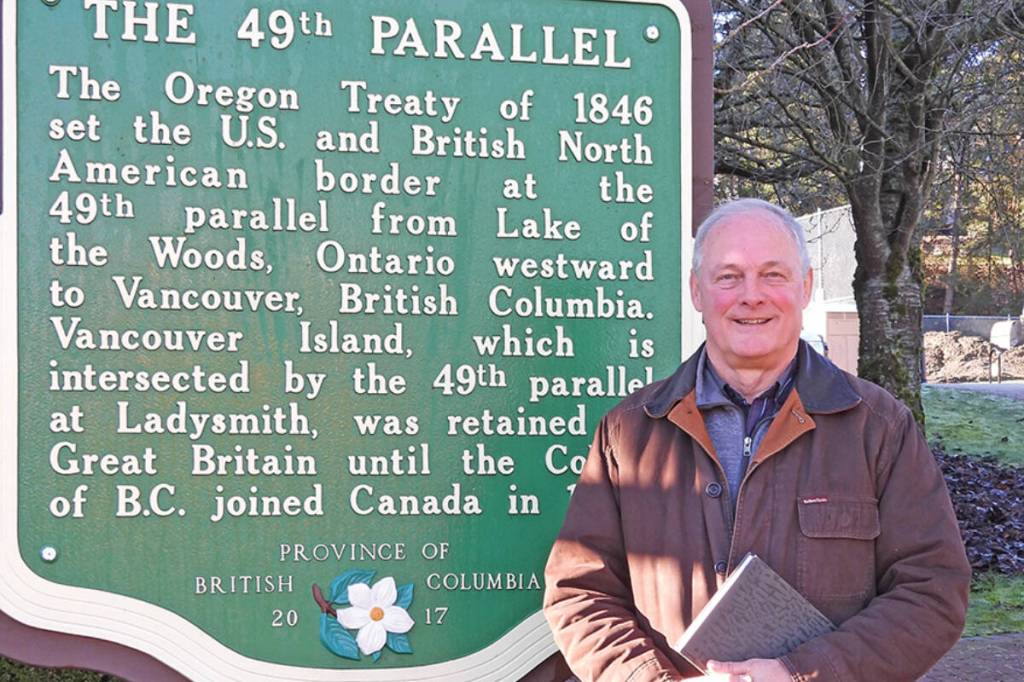
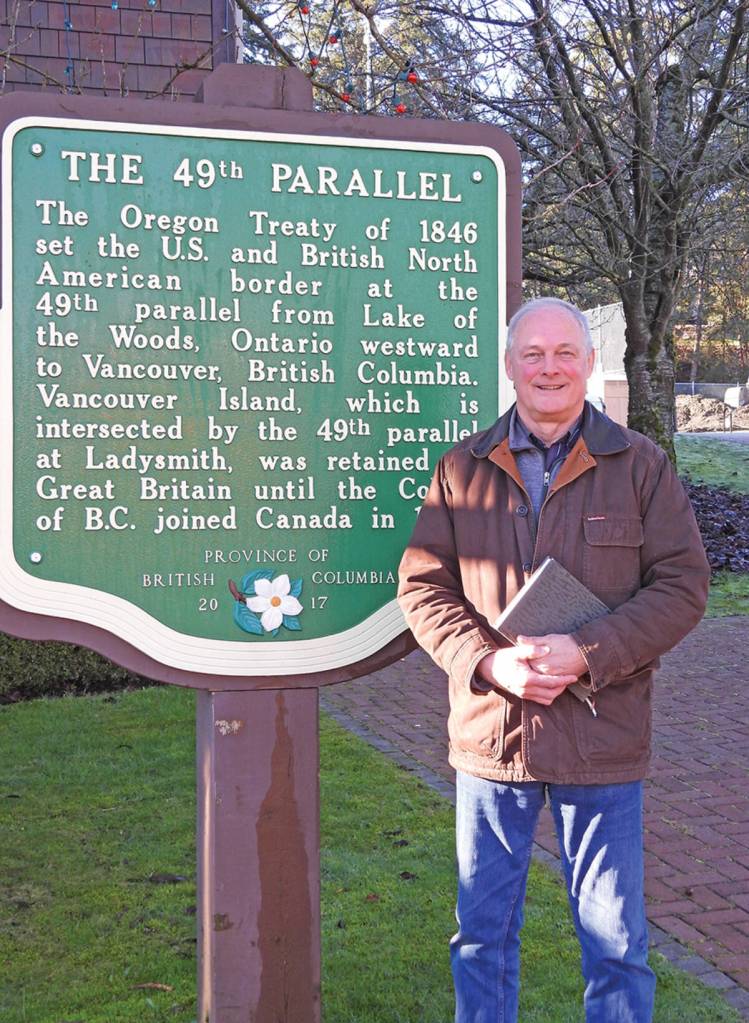
So how long do you need to be in an area to become a historian?
According to local resident and chair of the Ladysmith Historical Society, Quentin Goodbody, “well, geologists are historians, right? They read the rocks. It’s just a different timeline. I’ve always been interested in history to be familiar or develop a familiarity with where I am.” He went on, “I just started looking into the local history. I went down to the archives and Ed Nicholson was the president of the society at the time. He got talking to me, and one thing led to another.”
Goodbody and his family moved to Ladysmith in 2017, which is about the same time he got involved in the Historical Society. Born in Ireland, Goodbody came to Canada in 1978 to achieve a masters’ degree in palaeontology at the University of Alberta.
“I stayed on to get my PhD in geology, looking, sort of, at a regional survey of a particular group of rocks in the high Arctic — Devonian rocks. When I got my doctorate, I did a postdoctoral fellowship with the Geological Service of Canada. Again working up on the high Arctic, and then I went to the oil business.”
Goodbody worked for a variety of oil companies, and then in 1998 found himself and his family moving to Quito, Ecuador, more than 9,300 feet above sea level. They spent three years in South America and then moved back to Canada.
He ended up working for an energy company called Talisman Energy with worldwide operations.
“I worked [in] Malaysia, Vietnam, in the North Sea, South America again, Columbia and I also did work Papua New Guinea as well,” he said.
“Some of those spots, I would class them as a little bit volatile. We took precautions and the companies took precautions. We never had bad experiences. No, the companies I worked for took pretty detailed security precautions,” Goodbody said.
Talisman Energy got bought out by a Spanish company and Goodbody was sent back to Calgary from Bogota within a couple of months.
“I knew they were gonna make cuts. So then we said OK, we’re gonna move out here. We’d already bought a place in 2006. An old house on a lot in Saltair, and so we decided OK, this is time to move.”
The family had a cabin, on Thetis Island since 2000, so were familiar with the area.
“We knew we wanted to move here to retire,” Goodbody said.
Now Goodbody has dived right into Ladysmith’s past and present, looking at both the people and the artifacts.
“It’s the interaction. You know, Ladysmith really is 125 years old, but it’s packed a lot of history within that 100-plus years. Plus, of course, before the Town of Ladysmith, there was, well, obviously, there was the First Nations, and then with the arrival of the Hudson Bay Company, in the 1840s, up setting up the fort in Victoria. That’s an interesting piece of history,” he said.
“The colonization of Vancouver Island, as well, and setting up of the interaction between First Nation and the colonizers. Which is a difficult history. But interesting. There’s a lot of history there,” he said, including coal mining, logging and fishing.
“Ten years is… it’s short, but it’s long as well,” he said of his own Ladysmith residency. “You can pack a lot of stuff into 10 years, if you want to, and the archives here contains a treasure trove of information, a remarkable collection of heritage photographs. There’s the Ladysmith Chronicle, and its precursor newspapers in early Ladysmith. It’s possible to piece together a variety of histories, some very personal histories of people, others, histories of industries, such as the mining industry, the smelting industry, or the logging industry here. I mean, it’s hard to be in Ladysmith, be interested in history, and escape coal and logging, obviously.
”They’re both very unique histories, the coal history and the labour relations during the coal era, there’s a lot of human history in there too. The town has shades of the old town in some ways. You go past the Temperance Hotel in my mind’s eye, I see photographs, of it, from the archives. Broken windows and things, people throwing rocks at the building, ‘cause it houses strike breakers, yeah, during the 1914 strike. Things like that. Go down to Transfer Beach, Transfer Beach itself. A lot of people think it’s called Transfer Beach because they transferred coal. Well that’s not the case actually. It was the first railway transfer wharf on the island, and was an active railway transfer route until the ‘50s. From the 1900 to the 1950s.
“The first track laid on the E&N Railway was laid here in Ladysmith but at that time Ladysmith did not exist as a town. That was 1884/85, the town wasn’t really founded until, basically, 1899 or 1900,” he said.
Goodbody said he sees Ladysmith being a bedroom community in the future.
“Which, I think, it largely is now. Pretty well. There’s no real sort of heavy industry here apart from the two sawmills. Of course, there’s some boat refurbishing done down by the harbour there, and some fishing boats, but there’s quite a few retirees. It’s a funny mix. There’s people, retirees come in, but there’s long term residents who are still here. Sort of old established families, which makes it fascinating, actually.”
Goodbody told a story of local resident, Mickey Gould, coming into the archives with two shopping bags “full of higgledy piggledy stuff. He didn’t know what to do with it so it’s in my lap. Lots of photographs, family stuff, partial family, all stuff like that and that helped me build kind of a picture.”
Towards the bottom of the second bag was a bundle of notebooks tied together with twine and these were the handwritten diaries of his great great grandfather.
“He had gone from Victoria to Haida Gwaii to be the superintendent of a coal mine in 1870. These notebooks record his experiences there at the mine, and absolutely fascinating. So, what I’ve done is, first of all, we had to find a home for these. Gould’s great great grandfather was Thomas Russell who had come over on a Hudson Bay Company ship called the Norman Morrison in 1853.
“Russell had very interesting interactions with the Haida who were undergoing enormous cultural and social change at the time. Associated, they’d just gone through all these measles and smallpox pandemics, whiskey traders were infiltrating,” Goodbody said. “The Haida were just decimated, just dreadful. He met quite a number of Haida chiefs, more than he normally would have, because it was consolidation of Haida communities from the west coast over to the Skidigate because of depopulation.
”A ship came in to pick up the coal that he was mining and the captain was just a nasty character. He gave Thomas unending trouble,” Goodbody went on. “It [went] off with a short cargo. They couldn’t fill it up. It was about 450 tons instead of 600 tons of coal and then the Queen Charlotte Coal Company was going broke. They were over a month late in sending a ship to pick these guys up to bring them home and they ran out of food. So Thomas Russell had to do two epic canoe journeys, one to a village called Cumshewa to see if he could get some grub. When that failed he then went up the east side of Moresby Island.”
The last of the four notebooks is written in pencil because that’s the notebook he took with him to write his daily diary because he didn’t want to risk them getting wet and ink would become illegible.
“We’re grateful to Mickey Gould for having the trust in bringing this stuff to us. He wasn’t really interested in the contents of it, he just wanted to make sure that it was preserved somehow. But I don’t think he realized how exciting the story it actually is,” Goodbody said.
He said Ladysmith is going to need to consider more historical preservation in the future.
“What’s cool, the Islander and those folks protecting the historic front. There’s a number of buildings that are classic such as the Jones Hotel, the Black Nugget Hotel and the Travellers weigh heavily on my mind, because they’re iconic buildings for the town. Another weight that worries me is the future of the museum. It’s temporary where it is now and we know that. Those buildings and the museum need some significant strategic thinking about them.”
Goodbody said the society appreciated the support it gets from the town, and the aim is to work with them to preserve the community’s heritage.
“Not just from an esoteric perspective, but also from the perspective of value to the community. We think that the heritage aspect of Ladysmith is a major attraction for people to come here. We should carefully nurture them … you don’t know what you have until you don’t have it any longer.”